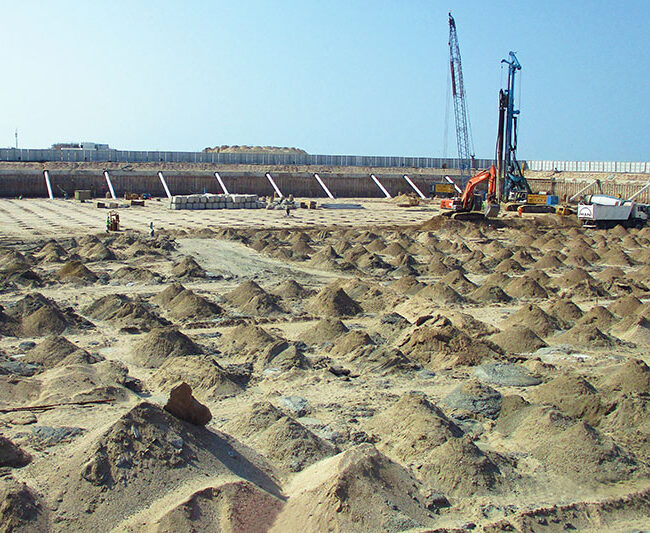
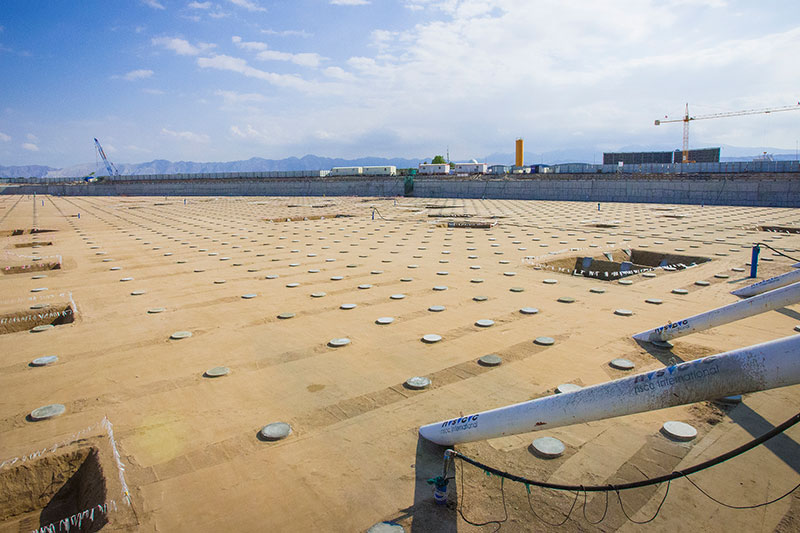
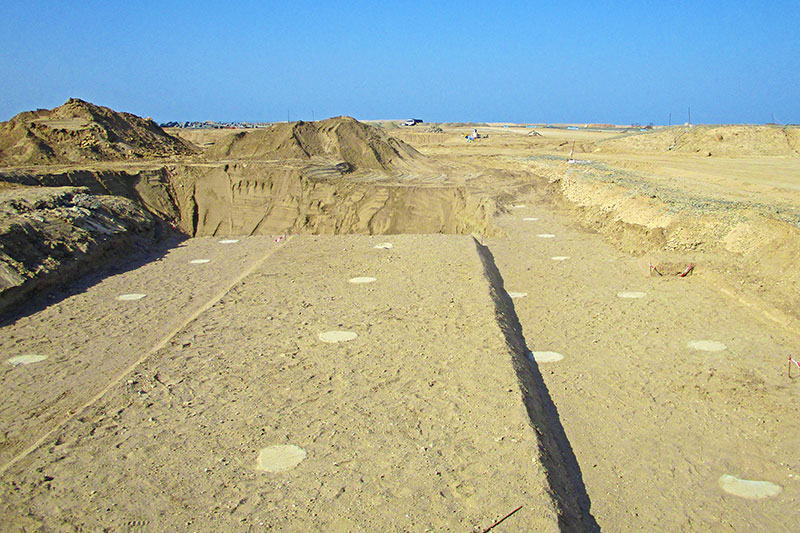
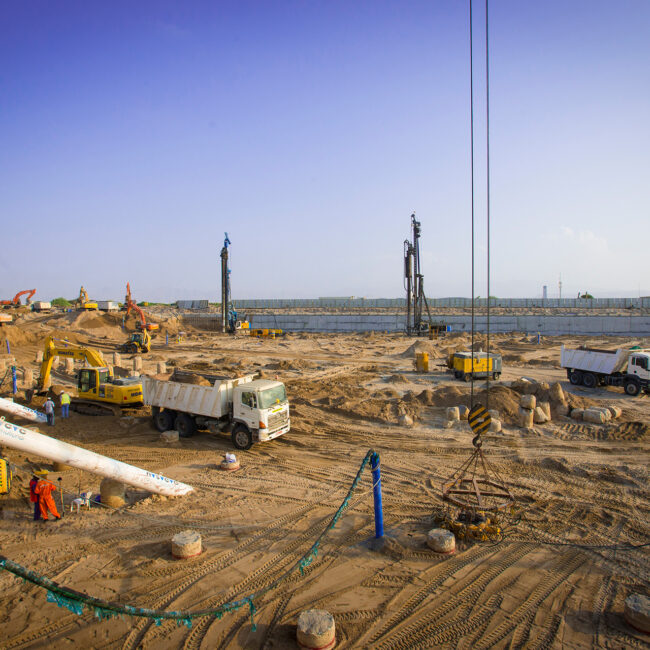
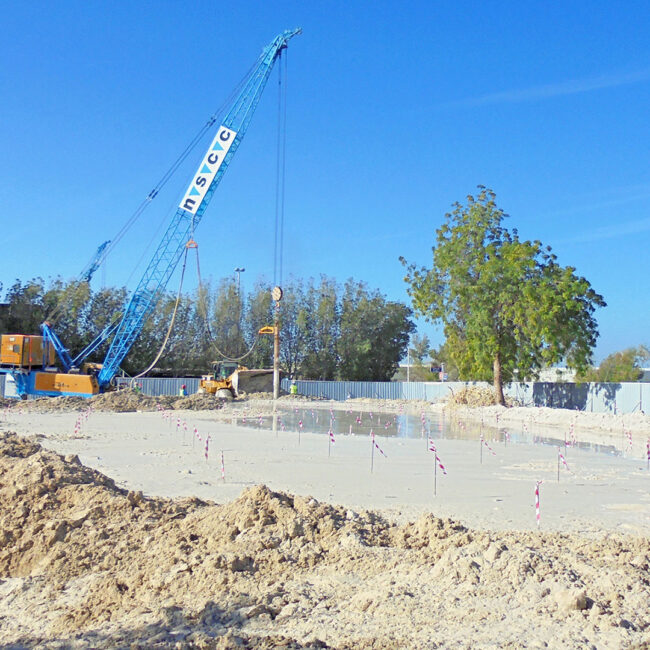
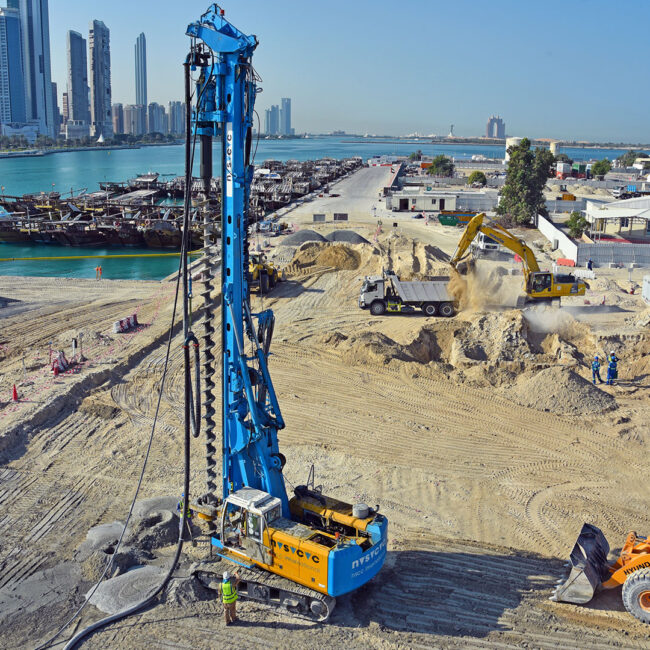
Rigid Inclusions (RI) or Controlled Modulus Columns (CMC) are a ground improvement method that uses high deformation modulus columns introduced through soft and compressible soils, in order to reduce settlements and compressibility as well as increase bearing capacity. The existing soil stiffness is combined with that of the stiffer CMCs and the superstructure loads are transferred through the soft soil layers, down to stiffer ground layers. The method’s efficiency depends on the stiffness relationship between the soil and the CMCs.
CMCs are a cost-effective alternative to traditional piling solutions and are applicable to a wide range of soil types, structure types and foundation systems, as they increase the bearing capacity and reduce settlements efficiently and with minimal spoil. They allow the transfer of shallow foundation loads on compressible soils to deep, stable layers for low costs, reduced load transfer requirements, and short construction times. They can also be used in combination with conventional deep foundation techniques, thus further optimizing the project’s performance and cost.
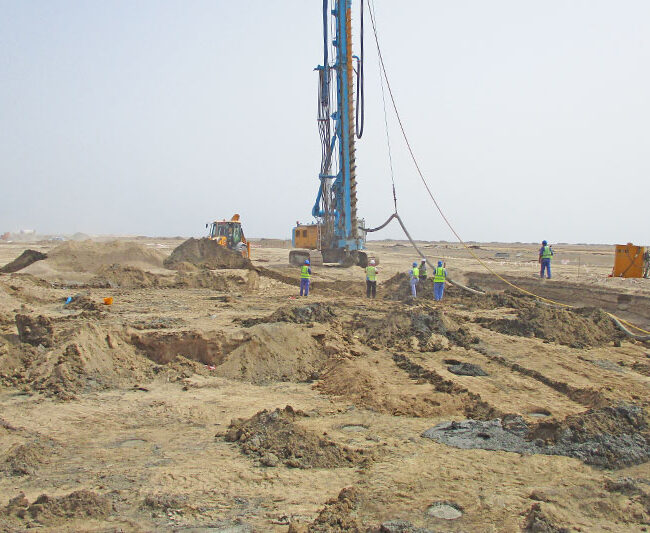
CMCs are usually 250 – 500 mm diameter and are executed by a discharge auger, with or without soil displacement. Equipped with a hollow mandrel, the auger penetrates the ground down to the required depth. Afterwards, as the mandrel is gradually lifted upwards, grout or concrete is injected at low pressure (up to 2 bars), through the hollow stem of the drilling tool, leaving behind a CMC. A transfer layer is finally introduced at the top of the CMC grid, that distributes the applied load between the ground and the CMCs.
Some common applications are industrial, commercial and residential buildings, road and rail embankments, storage tanks, plants and warehouses.