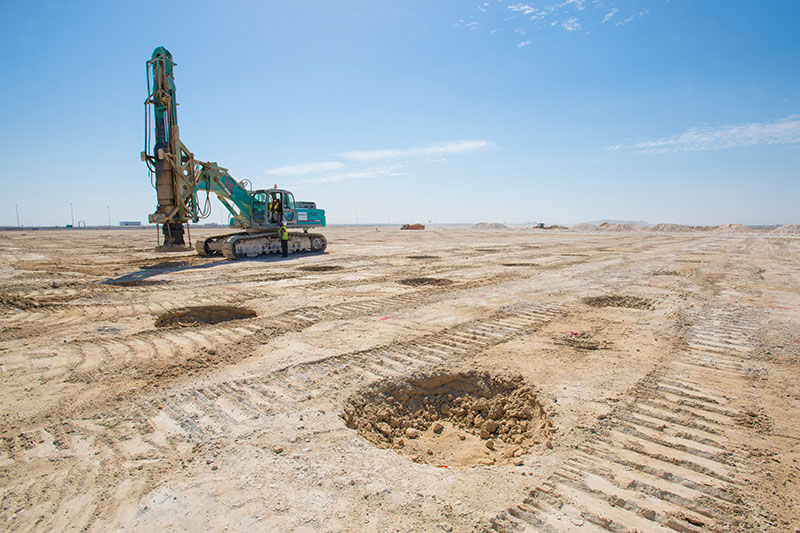
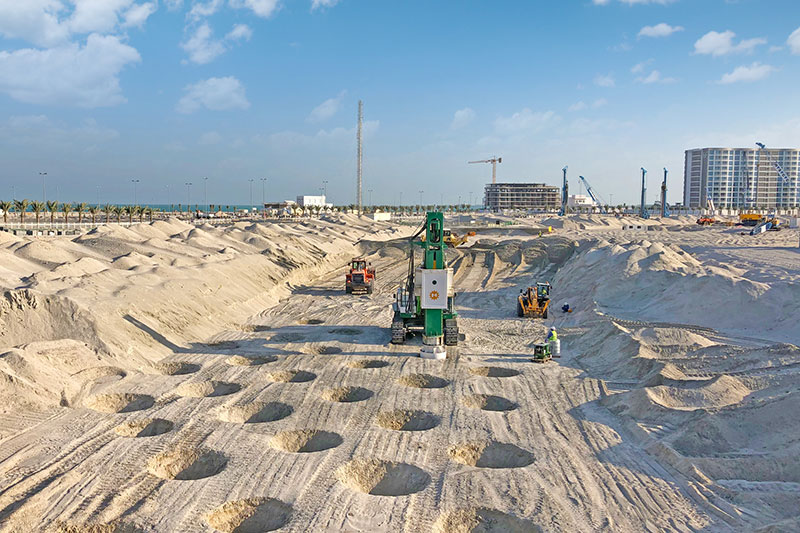
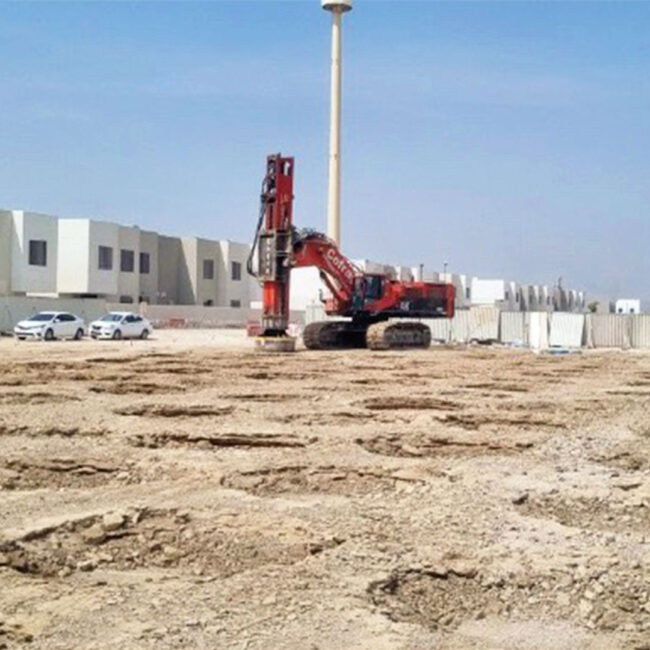
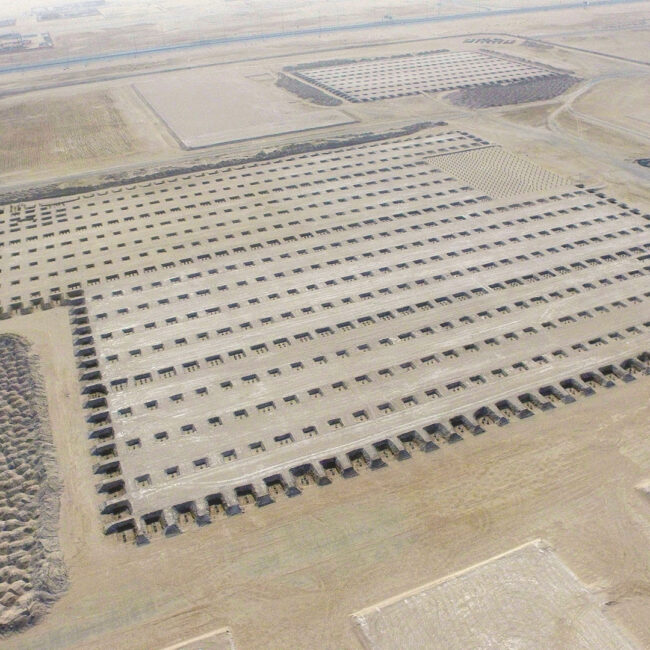
Rapid Impact Compaction (R.I.C.) is used to increase bearing capacity and stiffness of soils/fills to support building foundations, floor slabs, tanks, highways, railways, parking areas, airport runways. Mitigation liquefaction, reducing collapsible potential, compact granular fills in large lifts (up to 2 to 3 m) are other common applications.
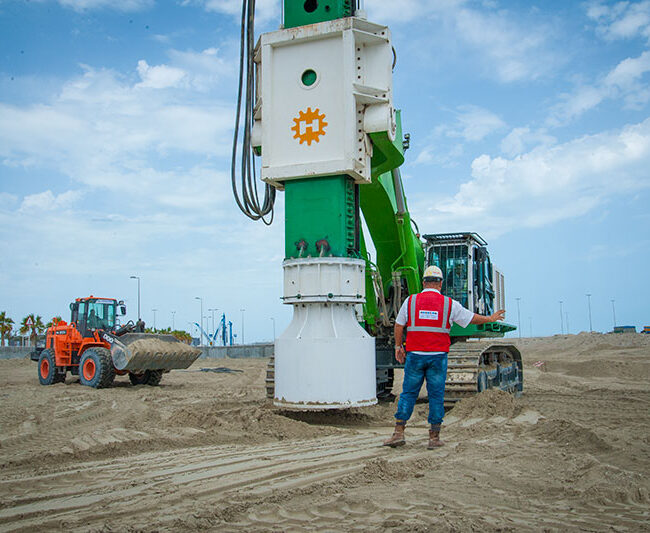
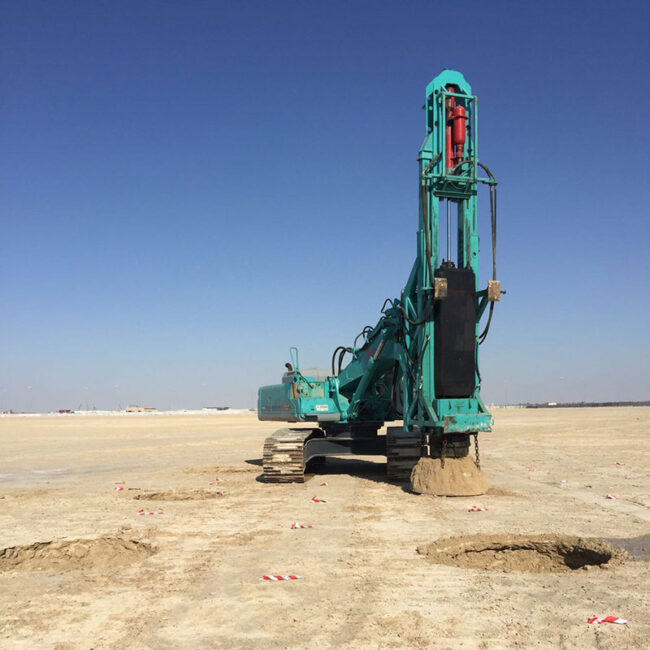
It densifies geomaterials by repeatedly dropping a hydraulic hammer mounted on a specially adapted excavator at a fast rate. The soil beneath the steel plate is compacted by the first blows, further blows push the dense material deeper to densify the underlying soils until little or no further penetration can be attained.
The R.I.C. method is generally very fast and controlled as it induces less vibrations than other methods due to low impact energy, making it a suitable method to operate closer to existing structures. It can detect weak areas during execution, allowing the increase in compaction energy on those areas. This method is in general effective for granular geomaterials (gravel, sand, silts, and uncontrolled fills) to a depth of 3 to 4 m.